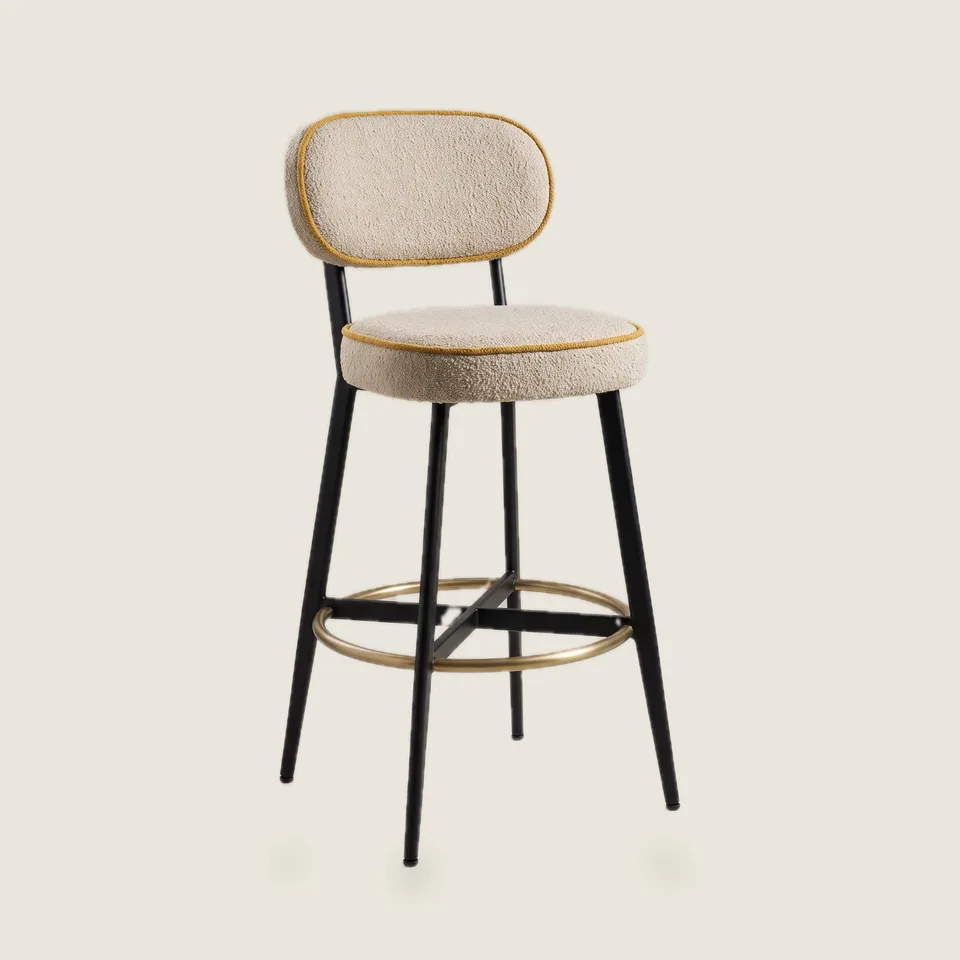
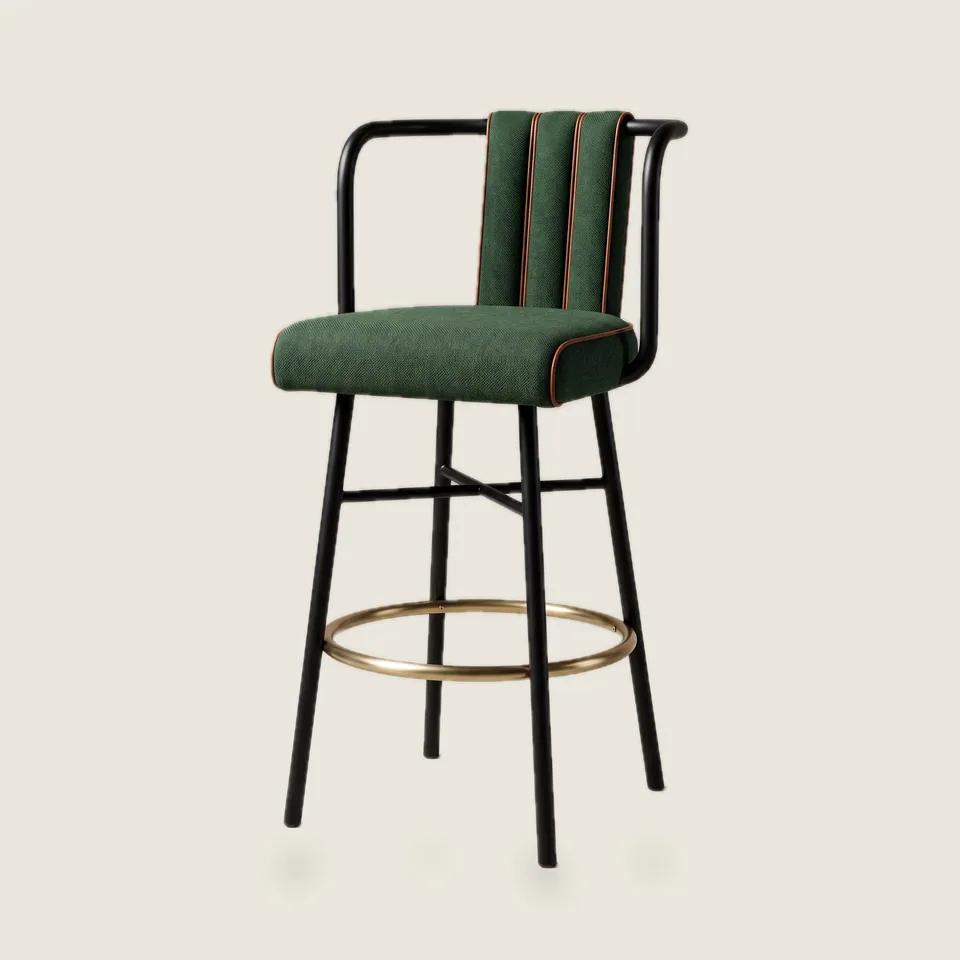
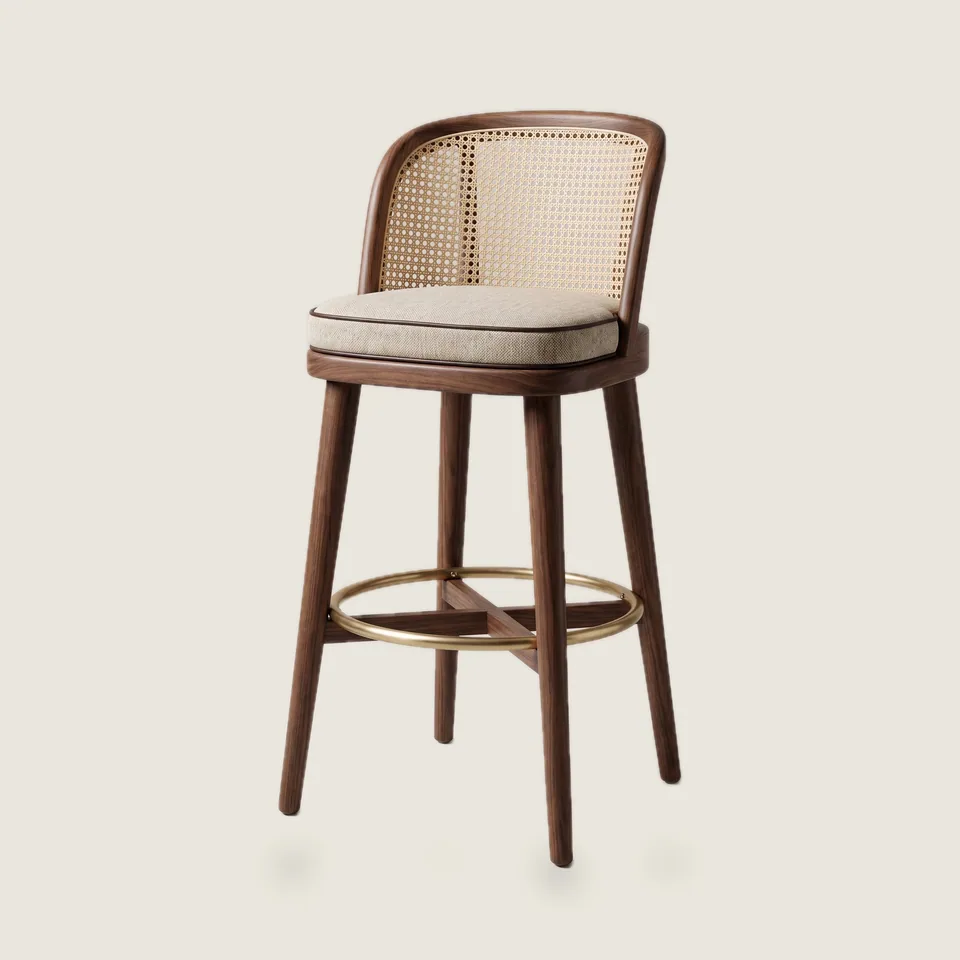
Stools are where taproom furniture fails first. They are dragged, tipped back on two legs, climbed by kids and kicked by boots, and every one of those actions loads the leg joints. Our stools use welded steel or jointed hardwood frames with cross stretchers, a full footring rather than a single bar, and glides that can be replaced when they wear down.
The height must match the bar. The rule of thumb is a 10–12 in (25–30 cm) gap between the seat and the underside of the bar top:
| Bar / counter top | Stool seat height | Typical name |
|---|---|---|
| 36 in (91 cm) | 24–26 in (61–66 cm) | Counter stool |
| 40–42 in (102–107 cm) | 28–30 in (71–76 cm) | Bar stool |
| 44–47 in (112–119 cm) | 32–34 in (81–86 cm) | Spectator / extra-tall |
Space stools 24–30 in (61–76 cm) centre to centre along the bar: about 24 in for backless stools, 26–28 in for stools with backs and 28–30 in for swivels or arms. That spacing decides your bar's seat count, so it belongs on the floor plan early.
Backs matter in a taproom. Guests settle in for a flight or a session, and a stool with a back keeps them comfortable longer. We offer channel-tufted, cane and upholstered backs, in commercial vinyl, leather or your own material (COM/COL).
At the bar, a stool takes its hardest knocks at the footring and the leg joints. That is why every stool we build has a full ring rather than a front bar, joints that are welded or mechanically reinforced, and glides that unscrew for replacement when the concrete wears them down.