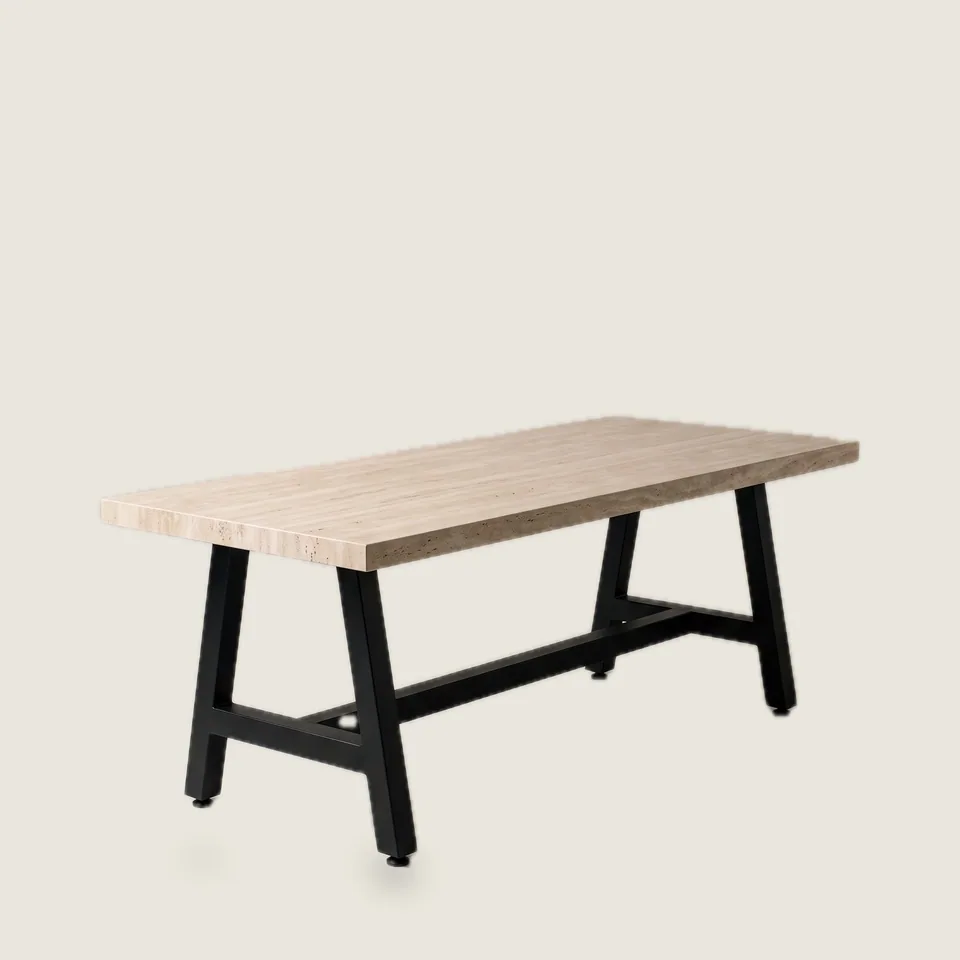
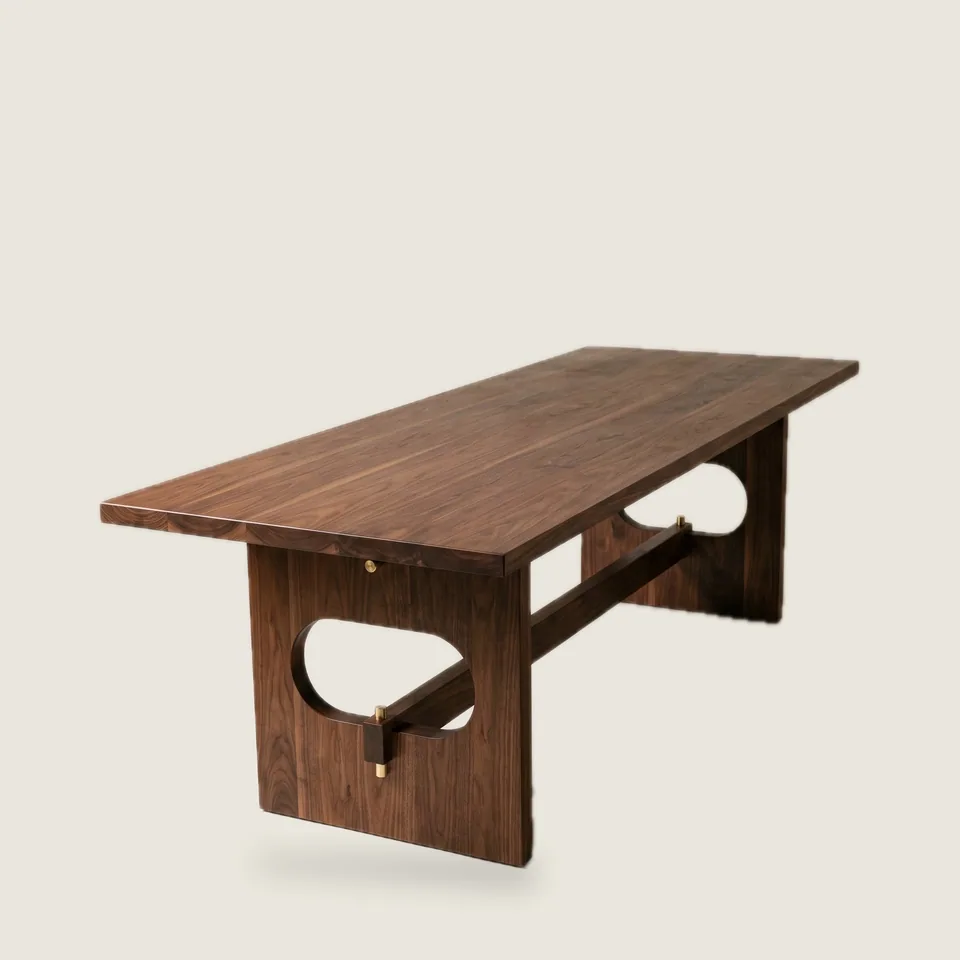
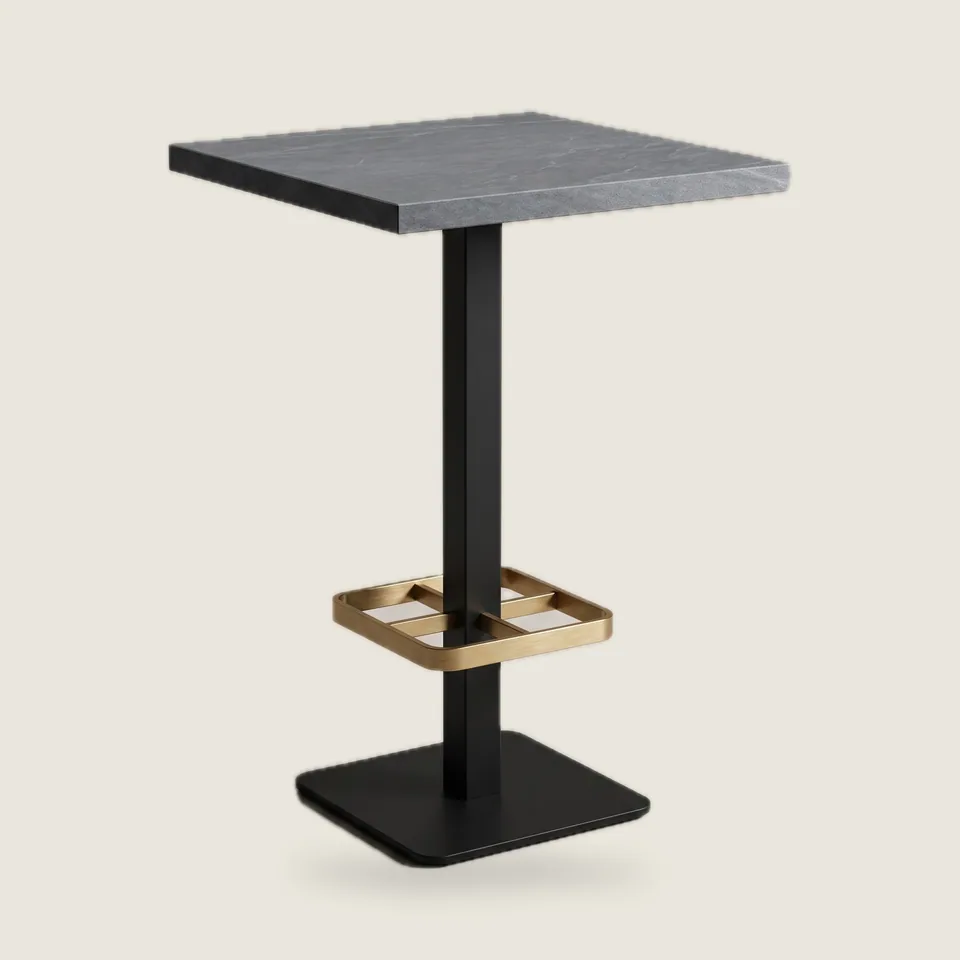
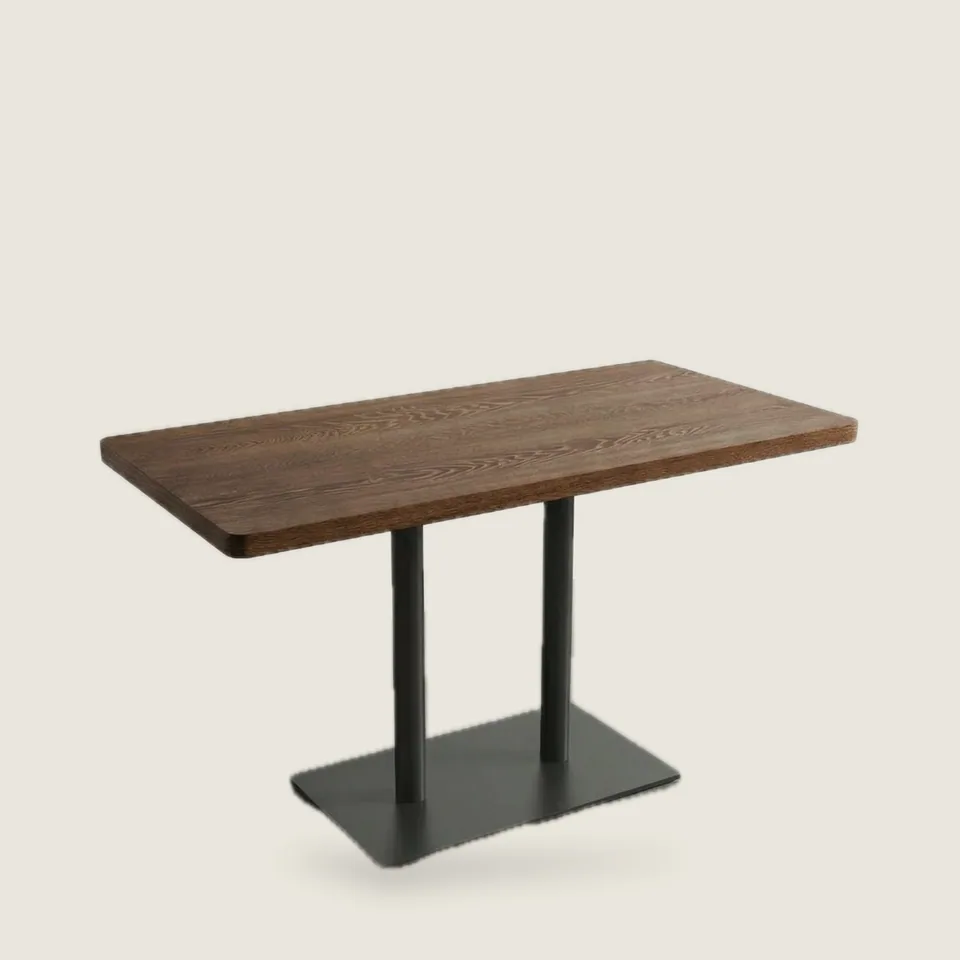
In a taproom, tables do two jobs at once. They have to seat strangers side by side — the long table where a group of eight and two solo regulars share space — and they have to survive being wiped, leaned on and dragged every night. Our tables are built on steel frames or solid timber with braced joints, and topped in sealed timber or sintered stone that doesn't mind a puddle of IPA.
The guiding numbers are simple. Allow about 24 in (61 cm) of table edge per guest, 30 in (76 cm) where people eat as well as drink, and keep two-sided communal tables 30–36 in (76–91 cm) wide so there's room for glasses, flights and a shared pretzel without the table becoming a barrier to conversation.
| Table | Standard size | Height | Seats | Frame |
|---|---|---|---|---|
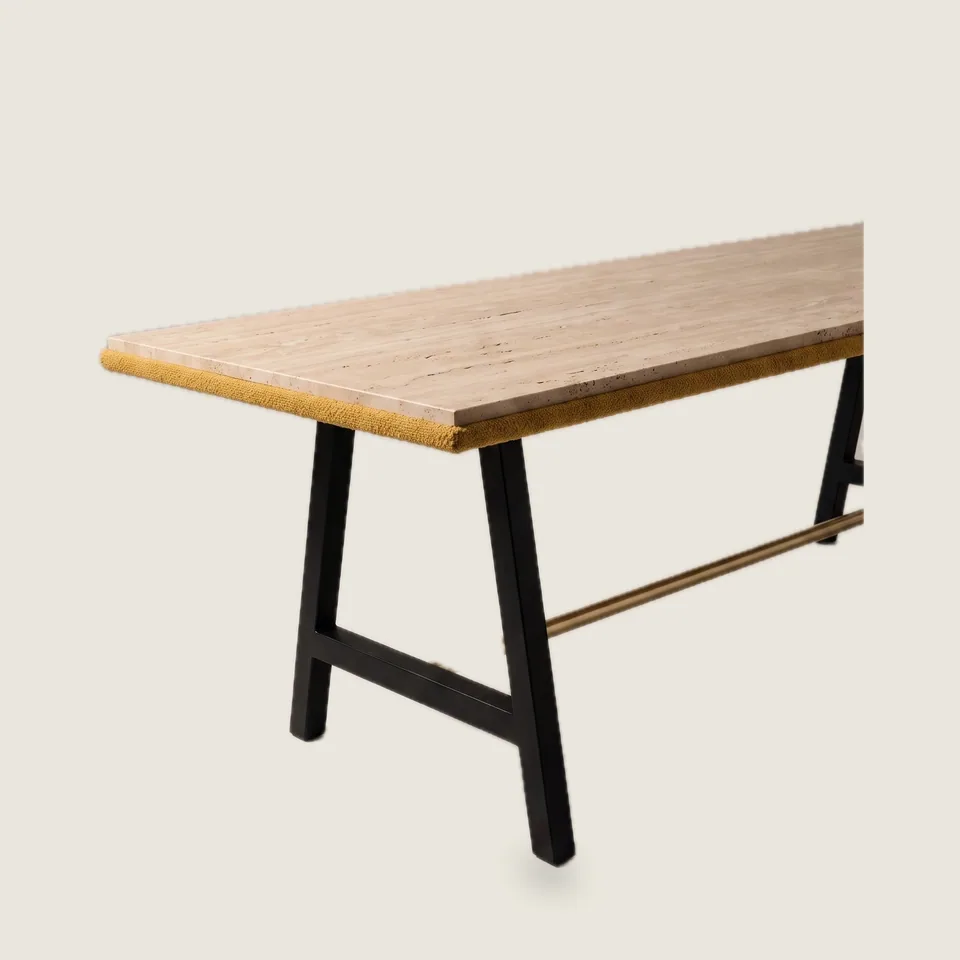
| A-frame communal | 94½ × 35½ in (240 × 90 cm) | 30 in (76 cm) | 8–10 | Black steel A-frames |
| Plank communal | 94½ × 35½ in (240 × 90 cm) | 30 in | 8–10 | Timber panel legs, brass pins |
| Two-post four-top | 30 × 48 in (76 × 122 cm) | 30 in | 4 | Twin steel posts on plate |
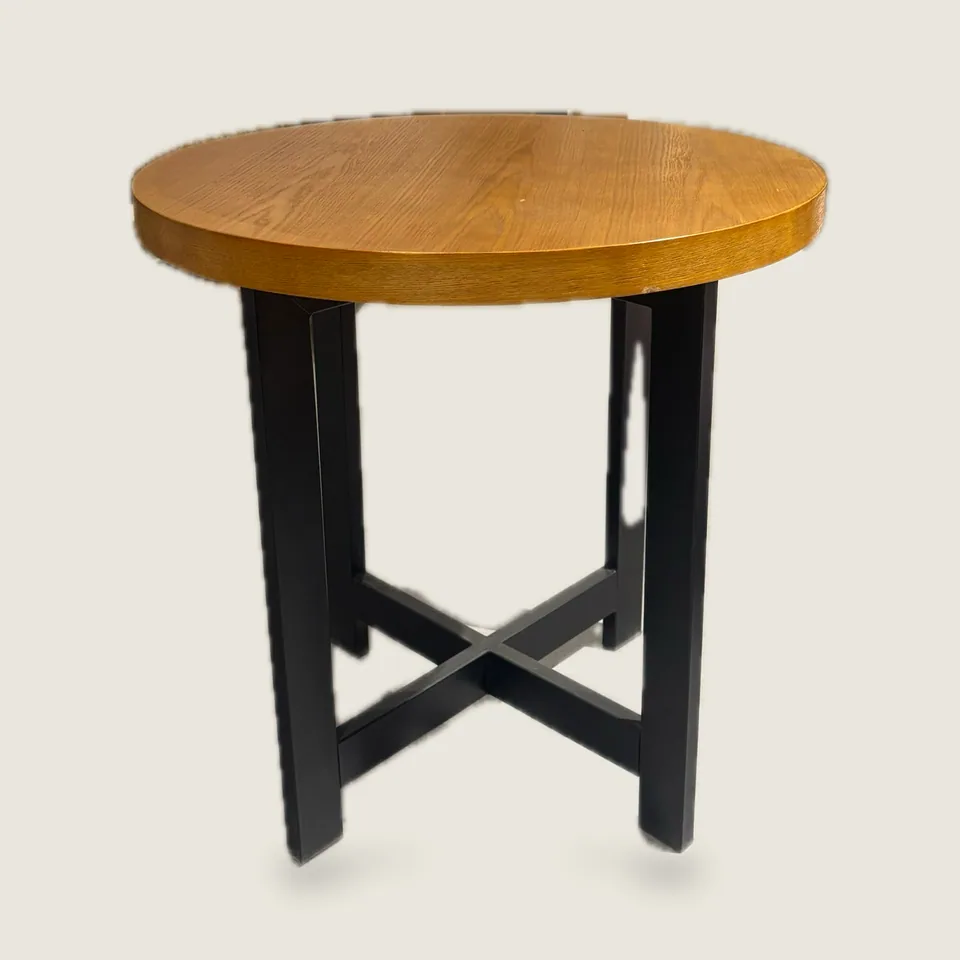
| Cross-brace round | Ø 32 in (81 cm) | 30 in | 2–4 | Crossed steel frame |
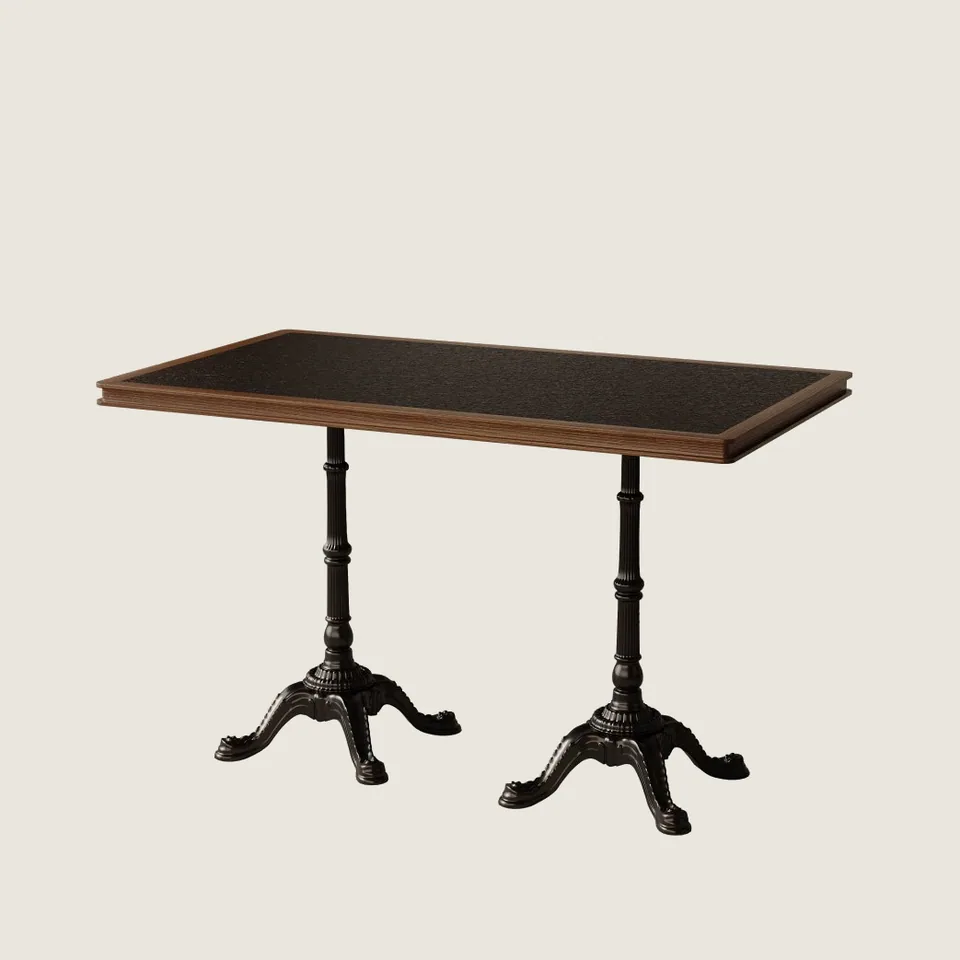
| Cast-iron twin | 30 × 48 in (76 × 122 cm) | 30 in | 4 | Cast-iron bistro pedestals |
| High-top | 27½ in (70 cm) square | 42 in (107 cm) | 2–4 standing or stools | Steel plate + foot ring |
All lengths and heights are made to order. Communal tables longer than 8 ft can be built in sections that join on a steel rail, which makes delivery through a brewery's roller door a lot easier.